
The UAE Tax framework will see important updates effective 1 January 2026. While Corporate Tax rates remain unchanged, amendments introduced by Federal Decree Law No. 16 of 2025 (VAT Law) and Federal Decree Law No. 17 of 2025 (Tax Procedures Law) bring procedural clarifications impacting Corporate Tax compliance, including the order of applying credits and incentives.
Businesses need to understand these changes to ensure compliance and optimise tax planning under the evolving regulations.
This article outlines the key updates businesses should know to manage tax obligations effectively under the updated UAE tax procedures.
Corporate Tax Rates and Profit Thresholds
The Corporate Tax rate structure remains as follows:
- 0% on taxable income up to AED 375,000
- 9% on taxable income exceeding AED 375,000
It is important to note that the AED 375,000 is a tax band rather than an exemption. All businesses subject to the regime must register, file returns, and comply even if taxable income falls within the zero-rate band.
Small Business Relief
Small Business Relief (SBR) remains available for qualifying resident taxpayers with annual revenue up to AED 3 million for tax periods ending on or before 31 December 2026. Key points include:
- Election of SBR treats taxable income as zero for the period.
- No carry forward of losses or net interest expense while SBR is elected.
- Exclusions apply for Qualifying Free Zone Persons and large multinational groups.
- Businesses should evaluate the trade-offs of electing SBR versus preserving tax losses for future use.
Strengthened Transfer Pricing Requirements
The UAE’s Transfer Pricing framework aligns with international OECD standards. Under Ministerial Decision No. 97 of 2023, documentation requirements include:
- Preparation of Master File and Local File if UAE revenue exceeds AED 200 million or as part of an MNE group with consolidated revenue over AED 3.15 billion.
- Submission of transfer pricing documentation within 30 calendar days upon FTA request.
- Maintenance of contemporaneous records demonstrating arm’s length pricing for related-party transactions.
Compliance and Filing Deadlines
The Corporate Tax Return and payment deadline remains nine months after the end of the financial year. For example:
- Financial year ending 31 December 2025: return due 30 September 2026.
- Financial year ending 30 June 2025: return due 31 March 2026.
Meeting these deadlines requires efficient coordination between accounting and tax teams.
Group Taxation and Consolidation
Eligible groups may elect to file consolidated returns if they meet the following conditions:
- At least 95% ownership/control across group entities.
- Same financial year-end and accounting standards.
- Exclusion of exempt persons and Qualifying Free Zone Persons.
Group filing can simplify compliance and provide benefits such as loss offset and cash flow management.
Tax Credits, Incentives, and Settlement Order
Government guidance clarifies the practical sequence for applying credits when settling Corporate Tax liabilities. Where multiple credit types apply, the recommended order is:
- withholding tax credits
- foreign tax credits
- Cabinet-approved incentives and reliefs
Businesses should document each credit type and embed the sequence in payment workflow.
Increased Penalties and Enforcement
The updated penalties framework includes:
- Late filing penalties of AED 500 per month for the first 12 months, increasing to AED 1,000 per month thereafter.
- Late payment interest charged at 14% per annum, calculated monthly until full settlement.
- A late registration penalty of AED 10,000.
- Underreporting penalties of up to 15% of unpaid tax plus 1% monthly interest, with specific rules for voluntary disclosures.
Penalties accrue monthly and include fines, interest, and registration fees as per Cabinet and FTA rules. Businesses should review the latest FTA guidance to confirm exact amounts and any available waivers before finalising compliance controls.
Preparing for the 2026 Corporate Tax Environment
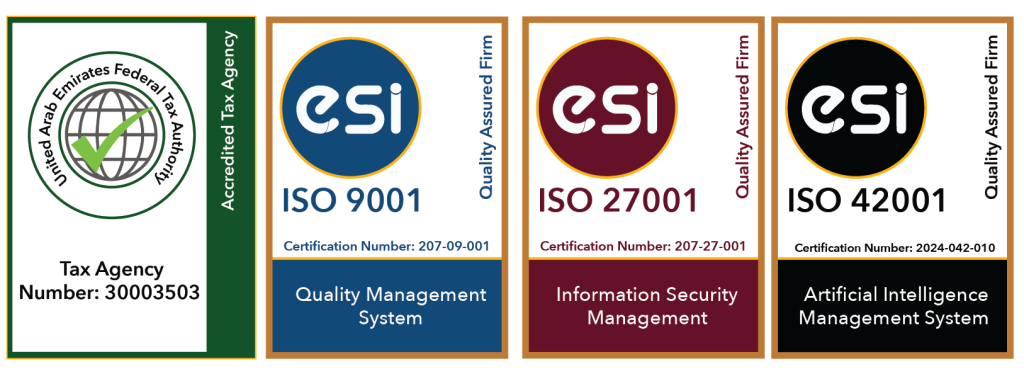
Proactive preparation helps minimise penalties and ensure compliance. SimplySolved, an FTA-approved Tax Agency with ISO 9001, ISO 27001, and ISO 42001 certifications, recommends the following steps:
- Advance Compliance Reviews: Conduct thorough reconciliations and confirm filing deadlines well in advance.
- Transfer Pricing Readiness: Assess documentation obligations and prepare Master File/Local File as required.
- Small Business Relief Decisioning: Evaluate the pros and cons of electing SBR.
- Tax Group Assessment: Consider eligibility and benefits of consolidated filing.
- Credit and Payment Sequencing: Establish processes to apply credits correctly.
- Penalty Avoidance: Monitor all registration, filing, and payment deadlines closely.
Conclusion
The January 2026 amendments primarily refine procedural aspects of UAE Tax regulations while maintaining core Corporate Tax rates and deadlines. Businesses that update their tax policies and processes to reflect transfer pricing, Small Business Relief, group filing, credit sequencing, and penalty management will reduce compliance risks and align with the UAE’s evolving tax framework.
About SimplySolved
As a UAE FTA Approved Tax Agency and an ISO 9001, ISO 27001, and ISO 42001 certified provider, SimplySolved supports businesses in managing UAE Corporate Tax compliance. Our approach combines practical interpretation of tax legislation with structured compliance processes, enabling businesses to meet key obligations under the Corporate Tax framework. By applying best practices and proactive measures, SimplySolved helps clients remain aligned with UAE tax regulations.
This summary is intended as a general guide and should not be relied upon as binding or specific advice regarding your tax obligations. We strongly recommend seeking professional legal and tax guidance tailored to your individual circumstances.